
In the annals of international rugby, few encounters encapsulate the exquisite tension between triumph and tribulation as poignantly as Scotland’s narrow 26-23 victory over Wales in the Guinness Six Nations Championship on February 21, 2026, at Cardiff’s Principality Stadium. This contest, marked by a remarkable Scottish resurgence from a substantial deficit, not only propelled the visitors to the pinnacle of the tournament standings but also ignited a fervent discourse regarding the intricacies of officiating, wherein decisions by referee Matthew Carley emerged as focal points of contention. Through a meticulous examination of the match’s progression, the controversial adjudications, and their broader ramifications, this exposition endeavors to elucidate the events with intellectual precision, drawing upon authoritative sources to foster a comprehensive understanding of the episode’s multifaceted nature.
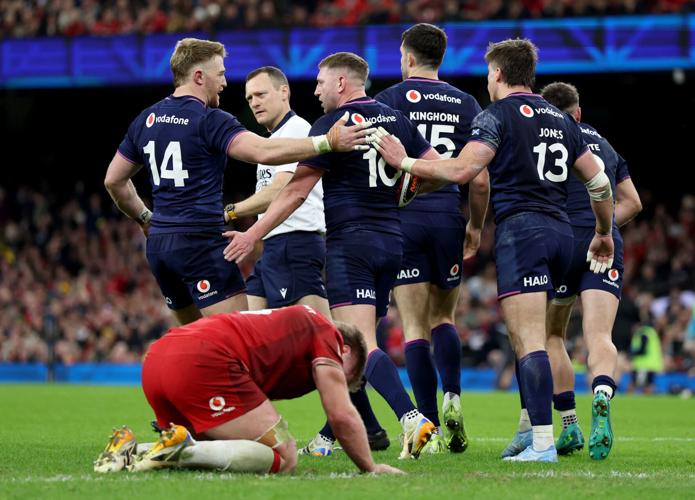
The Match’s Narrative: A Symphony of Strategy and Resilience
The fixture commenced with Wales asserting dominance, leveraging structured phase play to establish an early ascendancy. Centre Joe Hawkins incurred a yellow card for a perilous tackle, affording Scotland territorial advantages through penalties; nevertheless, Wales capitalized on a lineout theft to orchestrate a try by prop Rhys Carré, thereby galvanizing the fervent home supporters and securing a 17-5 halftime lead. The second half, however, witnessed a profound metamorphosis in Scotland’s performance, orchestrated masterfully by fly-half Finn Russell, whose precise kicking and personal try exemplified tactical acumen and individual brilliance.
As the narrative unfolded, Scotland methodically eroded the Welsh advantage. Wing Duhan van der Merwe’s dynamic advances, coupled with collective forward impetus, facilitated a narrowing of the scoreline. The dénouement materialized at the 74-minute mark, wherein a lineout drive culminated in a maul that propelled replacement hooker George Turner over the try line, with Russell’s subsequent conversion securing the 26-23 lead. Wales mounted a valiant final offensive, yet a conclusive penalty affirmed Scotland’s triumph, notwithstanding Russell’s errant conversion attempt. Head coach Gregor Townsend lauded his ensemble’s fortitude, attributing inspirational impetus to Russell, while Wales’ counterpart, Steve Tandy, discerned glimmers of progress amid the defeat’s sting.
This reversal, from a 20-5 Welsh lead to Scottish supremacy, underscores the sport’s inherent volatility, wherein strategic adaptations and mental resilience can invert seemingly insurmountable odds. Scotland’s accrual of five points contrasted starkly with Wales’ null return, exacerbating the latter’s protracted absence of away victories in the tournament.
Dissecting the Officiating Controversies: A Critical Analysis
Central to the post-match discourse was the scrutiny of referee Matthew Carley’s decisions, particularly in the latter phases, which Welsh partisans perceived as disproportionately favoring Scotland. Marking his 50th international engagement, Carley’s adjudications elicited vehement responses, with social media platforms serving as arenas for impassioned critiques.
The preeminent contention revolved around the prelude to Scotland’s decisive try. Number eight Matt Fagerson’s integration into the maul from an anterior position ostensibly impeded Wales’ replacement prop Archie Griffin, constituting potential obstruction or offside infringement. Despite the try’s validation, Carley’s obscured vantage, compounded by the inaction of assistant referees and Television Match Official Ian Tempest, precipitated accusations of oversight. Analogies to American football blocking proliferated, with eminent former referee Nigel Owens concurring via social media that penalization was warranted.

A supplementary episode involved scrum-half Tomos Williams’ clearance of Scotland flanker Rory Darge at a ruck, resulting in the reversal of a prior Welsh penalty advantage. This negation precluded a potential three-point accrual, thereby shifting momentum decisively. Welsh advocates posited that Carley’s interpretations exhibited temporal inconsistency, favoring Wales initially at breakdowns but veering toward Scotland subsequently. Television personality Nick Knowles amplified the discontent, echoing prior censures of Carley’s stewardship.
These incidents, while emblematic of rugby’s interpretive complexities, illuminate the challenges inherent in officiating a sport characterized by rapid dynamism and subjective judgments.
Candid Reflections on the Officiating and Its Integrity
Rugby’s officiating milieu demands unparalleled acuity amid ceaseless flux, wherein referees proffer instantaneous verdicts under duress. Matthew Carley navigated an arduous terrain, yet the maul incident’s intricacies—exacerbated by positional limitations—underscore the imperative for enhanced technological intervention. Owens’ authoritative endorsement lends substantial credence to the assertion that Fagerson merited sanction, potentially altering the contest’s trajectory.
Notwithstanding, Wales’ self-inflicted lapses—conceding gratuitous penalties and forgoing opportunities—cannot be discounted. The Williams reversal, while contentious, aligns with contemporary interpretations for some observers. Tandy’s post-match restraint, abstaining from attributing defeat to officiating, exemplifies commendable equanimity.
In deliberated perspective, the controversies possess substantive merit; the maul obstruction exerted material influence, conceivably preserving Welsh supremacy had penalization ensued. Rugby’s ethos accommodates such ambiguities, acknowledging officials’ humanity and technology’s limitations. Welsh constituencies harbor legitimate umbrage, yet Scotland’s tenacity and Russell’s virtuosity merit unequivocal acclaim. This episode, rather than diminishing the sport, enriches its narrative tapestry, fostering dialogues that propel evolutionary refinements in governance.
Ramifications for the Contending Nations and the Tournament
Scotland’s ascendancy augurs well for their championship aspirations, buttressed by antecedent triumphs over England and burgeoning confidence. Conversely, Wales evince incremental amelioration in resolve and structure, yet victories elude them, intensifying administrative imperatives within the Welsh Rugby Union. This fixture’s theatricality perpetuates engagement, with officiating debates augmenting the Six Nations’ allure.
Broader implications encompass potential enhancements in refereeing protocols, perhaps amplifying TMO utilization to mitigate oversights. The tournament’s vitality resides in such crucibles, wherein athletic prowess intersects with interpretive artistry.
Epilogue: The Enduring Allure of Rugby’s Drama
Scotland’s 26-23 conquest over Wales epitomizes the sport’s dramatic essence, with Finn Russell’s preeminence and the collective resurgence captivating aficionados. Yet, officiating controversies, spearheaded by Matthew Carley’s determinations, commandeered subsequent narratives, encompassing the maul try and penalty inversions. Rugby’s stewardship necessitates perpetual refinement, integrating technology to ensure equitable adjudications.
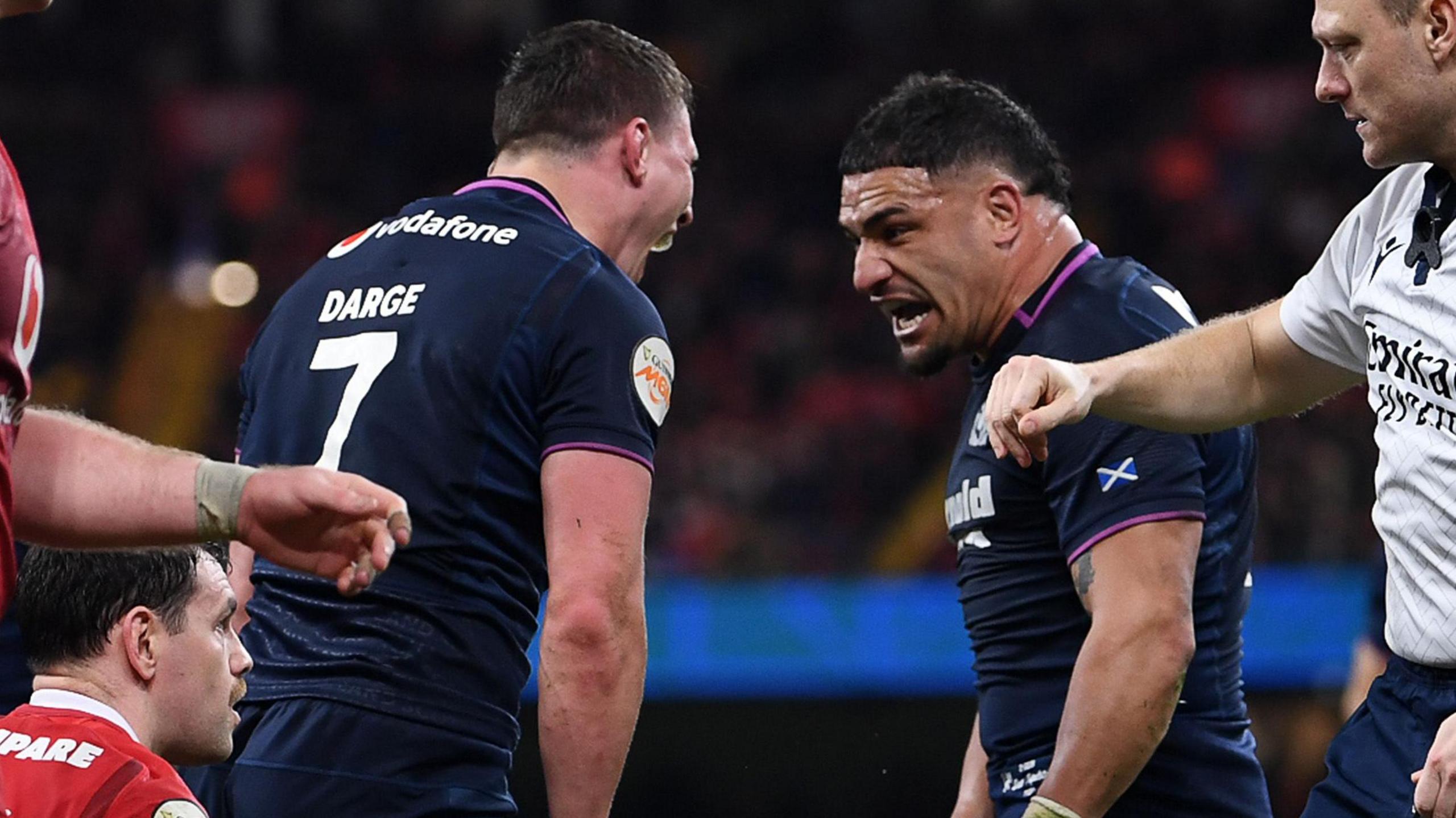
As the Six Nations unfolds, Scotland pursues exalted honors, while Wales endeavors toward inaugural success. This installment reaffirms rugby’s visceral magnetism: a confluence of elation and exasperation that perpetuates its timeless fascination.