
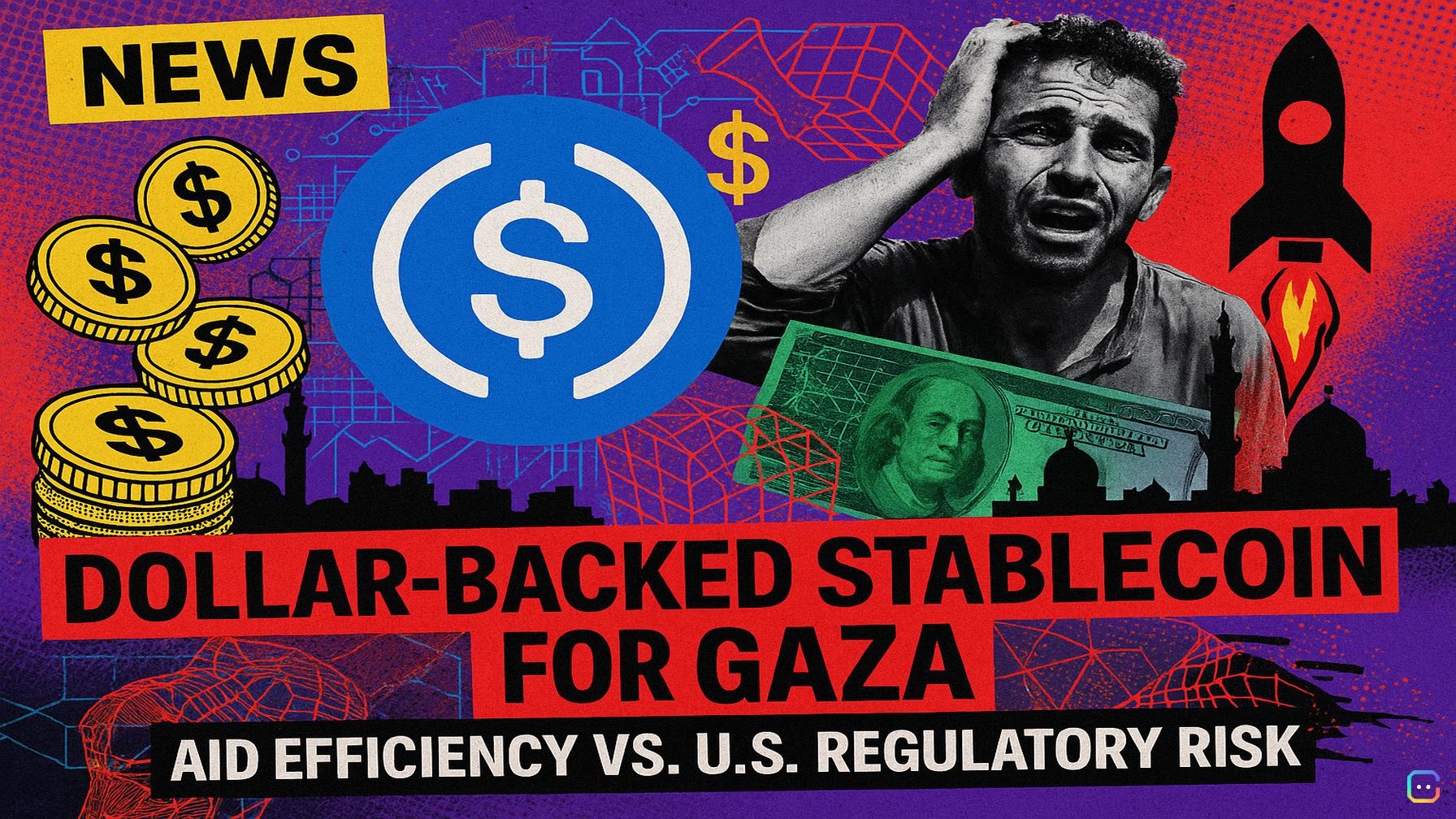
A proposal to use a dollar-backed stablecoin in Gaza’s postwar economy is putting a spotlight on how U.S.-denominated crypto could reshape humanitarian aid, salaries and everyday commerce — and why that prospect carries both promise and peril.
What’s being proposed
Advisers connected to U.S. President Donald Trump’s Board of Peace have floated the idea of issuing a privately run stablecoin pegged 1:1 to the U.S. dollar for use in Gaza as part of postwar reconstruction planning, the Financial Times reported. The concept, presented by Israeli tech entrepreneur Liran Tancman — an unpaid adviser to the Trump-linked Board of Peace chaired by Jared Kushner — would not replace a Palestinian currency but serve as a supplementary payment rail to move aid payments, wages, remittances and retail transactions in a territory where much banking infrastructure has been destroyed.
Why proponents think it could help
Supporters argue a dollar-backed stablecoin could address immediate operational challenges in Gaza: physical cash shortages, damaged banks, and the need for fast, low-cost settlement of funds. Technically, a dollar-pegged token can enable near-instant payments and reduce dependence on fragile cash logistics — a model that has already seen uptake in parts of the developing world with limited banking access. The plan, as described, would include traceability and measures to comply with U.S. anti-money-laundering rules.
The regulatory and geopolitical risks
But the proposal also highlights a key vulnerability of dollar-denominated stablecoins: dependence on U.S. regulatory forbearance. Major tokens such as USDT and USDC already make up more than 70% of the global stablecoin market, effectively exporting U.S. monetary influence through private issuers. Embedding a postwar economy in that system would increase Gaza’s exposure to U.S. enforcement or sanctions actions; any future restrictions could interrupt redemptions or transactions and create a single point of failure for aid flows in a territory with few alternatives.
Political context and status
The discussions come amid growing crypto activity by figures linked to Trump; the former president has been more open to digital assets than during his first term, and entities connected to his circle have launched dollar-backed stablecoin initiatives. The FT, however, says there is no disclosed direct link between those ventures and the Gaza proposal. Importantly, the idea remains exploratory: no formal proposal has been submitted to the U.S. administration, and regulatory approval and broader political backing would be required before anything could move forward.
Why it matters
Beyond Gaza, the debate underscores how stablecoins are evolving from market instruments into tools considered for humanitarian and state-adjacent economic use. That raises questions about accountability, jurisdiction, and the trade-offs between rapid payment capability and geopolitical risk — particularly where recipients have limited financial alternatives.
Status: Conceptual. Source: Financial Times reporting. Presented by: Liran Tancman (adviser to the Board of Peace). Board chaired by: Jared Kushner. No formal submission to U.S. administration.
Disclaimer: AMBCrypto’s content is informational and not investment advice. Trading or owning cryptocurrencies is high risk; readers should do their own research. © 2026 AMBCrypto
Read more AI-generated news on: undefined/news