
It’s the rainy season in Bali, and this time around, things have been especially heavy.
Torrential downpours have caused flooding in the streets of popular tourist and surfing destinations like Kuta, Seminyak, Sanur, and beyond.
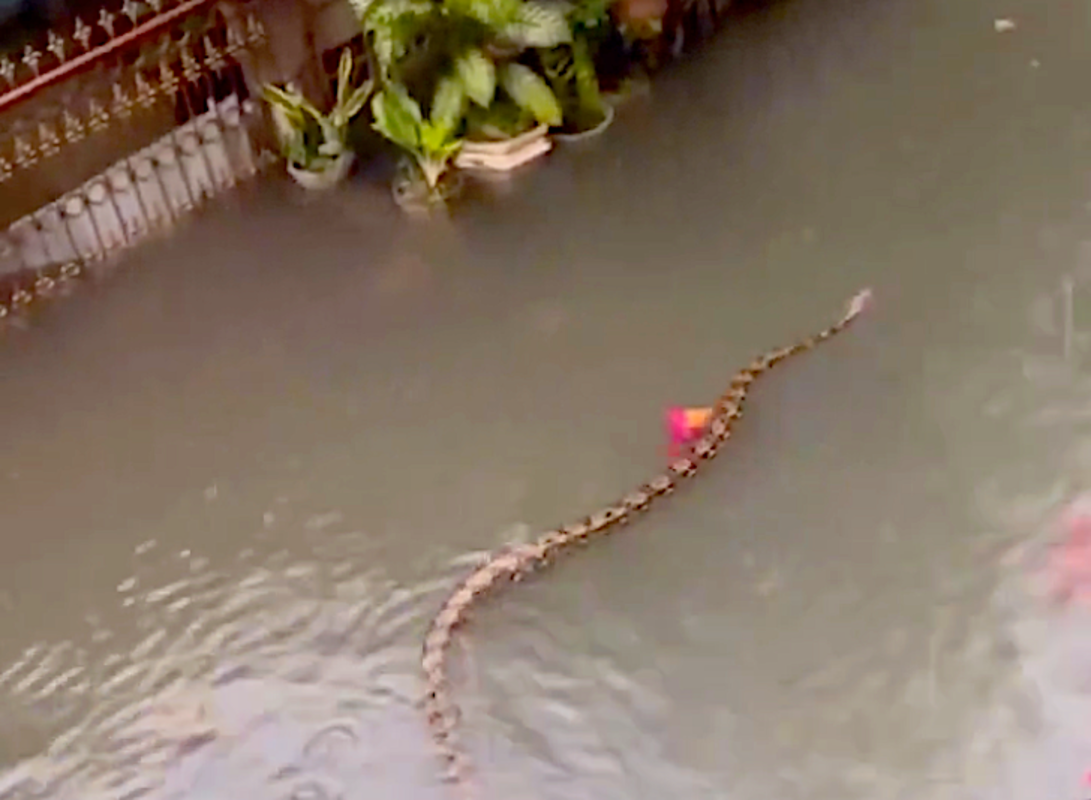
More than just rain and flooding, however, the deluge has caused evacuations, fallen trees, landslides, and…gigantic snakes taking to the soggy streets. See below for the latter, as a 16-foot python was captured on camera cruising down the road.
Reposting a collection of snake sightings on X, it was reported:
“In Bali, at the height of the rainy season, huge pythons have been seen swimming through the streets Tourists are sharing videos showing snakes literally gliding across flooded courtyards and roads. Heavy rains continued for nearly three days without stopping, with water levels rising high enough to flood villas, swimming pools, and parked motorbikes.”
Related: Tourist Death Trap: Giant Wave Slams Bathers in Bali (Video)
The Burmese Python is a known snake of Indonesia, and according to NatGeo:
“Native to the jungles and grassy marshes of Southeast Asia, Burmese pythons are among the largest snakes on Earth. They are capable of reaching 23 feet or more in length and weighing up to 200 pounds with a girth as big as a telephone pole… They are also excellent swimmers, and can stay submerged for up to 30 minutes before surfacing for air.”
🐍In Bali, at the height of the rainy season, huge pythons have been seen swimming through the streets
Tourists are sharing videos showing snakes literally gliding across flooded courtyards and roads. Heavy rains continued for nearly three days without stopping, with water… pic.twitter.com/yB533Cfe1x— NEXTA (@nexta_tv) February 25, 2026
Typically, the dry season (April-October) is primetime for surfing on the Bukit Peninsula. That’s when the famed waves like Uluwatu and Padang Padang really come to life. And when the crowds of tourists from Australia, the USA, and beyond flock the lineups. The wet season (November-March) is when other parts of the island – and other waves, like Keramas and Nusa Dua – primarily start doing their thing.
But really, there’s waves pretty much year-round in Bali. Just watch out for snakes.